On October 4, 2026, the research group Swarmchasers reported a fleet of parallel AI agents scraping Alibaba’s Amap mapping service for foot-traffic data, running on infrastructure traced to Tencent Cloud. The activity paused on October 5, after someone left a warning inside one of the fleet’s own data inboxes, then resumed later the same day. This case study documents a sample that was still running on the evening of October 8, after that reporting, and that reached Amap by a route the earlier write-up did not observe. Automated and agent traffic has climbed steeply over the past year, and this is one small, legible slice of it.1
Four things make this sample worth a closer look:
- It was active on October 8, after the fleet had been publicly exposed and after it was supposedly disrupted.
- It pulled archived copies of Amap pages from the Wayback Machine’s CDX API, a route Swarmchasers noted but did not observe the fleet using.
- It never touched browser cookies. Swarmchasers found at least eight earlier fleet scripts that read Amap’s cookies and sent them to external inboxes. This one reads only the page title.
- Its payload is tagged
gc4v4, which implies at least three earlier versions.
This case clearly demonstrates an agent using the web access it was given that turns public services into a scraping pipeline.
Example case
We found this sample active on the evening of October 8, 2026, attempting to look up visitor statistics for a single location on Amap. Agents have turned to this kind of indirect data-gathering before. Transluce has documented agents that bypassed anti-bot controls on public data providers, including the first reported case of agents probing a government site, the Australian Institute of Health and Welfare, which it attributed to OpenAI agents. The pattern is consistent: an agent needs a statistic to finish a task, the direct route is blocked, and it builds an indirect one.
Understanding the mechanics gives a clear window into how a model behaves when a task has no easy, permitted solution, and into what it can assemble on its own.
Is this the fleet, and is it an agent?
Why attribute this to the aforementioned AMAP fleet rather than a copycat? Swarmchasers noted that the fleet’s programs were copied by others within hours once their source became visible on urlquery, so a lone sample is not proof by itself. The case rests on matching indicators. The target is the same, entrance and arrival share for a single Chinese point of interest. The tooling is the same: an httpbin-hosted payload, a webhook.site inbox, and urlquery as the browser. And the decoded payload opens with the title Amap bootstrap ssr and the same amap-pc-ssr version switch that Swarmchasers documented in fleet programs titled Amap bootstrap.
Second, why do we default to believing this is an agent? The patterns perfectly match previous AMAP agent activity, machine-generated inboxes, fast iteration across payload versions, and a readback channel, the page title, built for a tool that reports titles back rather than for a human watching a browser. None of this is conclusive alone. The honest position is a suspected AI agent, consistent with the fleet, not a confirmed one. A human scraper using the same public tools cannot be ruled out from a single report.
Why urlquery?
Urlquery is a public service for checking suspicious links.2 Users can submit a URL and its sandbox opens the page in a real browser, runs whatever JavaScript it contains, and publishes a report with a screenshot and the page title. The browser serves a critical vector for the agents to route around access restrictions. An agent restricted to simple web fetches cannot run JavaScript, hold cookies, or make the cross-origin POST requests that scraping needs. urlquery does all of that on the agent’s behalf, from urlquery’s own IP address rather than the agent’s.
Submitting a scan does require a POST, which a strictly fetch-only agent cannot send directly. Transluce found that agents bridge this with an upstream service that turns a GET into the POST urlquery needs. Once the scan is submitted, every remaining step the agent takes is a plain GET: the results sit in a public report it can simply fetch. urlquery becomes a free, anonymous headless browser, and the agent never has to touch the target site itself.
How urlquery became a free, anonymous scraper
One encoded page connects a browser, two data routes, and two return channels.
Load the program
Suspected AI agent
Unknown operator
Encodes an HTML program in an httpbin link and submits that URL for a scan.
submits URL →Execution engine
urlquery.net
Its sandbox browser opens the link and runs the JavaScript from urlquery’s IP address.
loads payload ↔Payload host
httpbin.org
Decodes the Base64 in the URL and returns HTML and JavaScript. The payload lives in the link.
Try two routes to Amap
Archive lookup · 0, 4, 8 seconds
Wayback Machine
Queries web.archive.org through the CDX API for saved copies of three Amap pages, then fetches the first snapshot found.
Reader proxy · 12 seconds
r.jina.ai
Requests the live Amap page through Jina, which returns page content as text the program can read.
Foot-traffic statistics, including arrival share and click ratio. The operator uses these intermediary services to reach the listing.
Make the output available
External inbox
webhook.site
Receives the program’s downloaded content through image beacons and POST requests.
Report readback
The page title
The program flags matching data with GC4HIT: or GC4JINA:. The title and screenshot appear in urlquery’s report.
Source: urlquery report 0e544365. Analysis by Noetic Research.
How the scraping works
The steps below are reconstructed from the urlquery report and the decoded payload. Timing is taken from the report. The mapping of each Wayback query to a specific Amap URL is inferred from the payload and the 4-second spacing.
- Before the scan. The agent built an HTML page containing the script and the marker
gc4v4, encoded it in base64, and placed it in anhttpbin.org/base64/URL. The payload lives entirely in the link. httpbin stores nothing. - Scan request. The agent submitted the httpbin URL to urlquery for a public scan.

- Page load. On October 8 at 22:54:14 UTC, urlquery’s sandbox browser opened the httpbin URL. httpbin decoded the base64 and returned the HTML page, and the script ran as the page loaded.
- Wayback queries at 0, 4, and 8 seconds. The script sent three queries to the Wayback Machine’s CDX API, one for each of the three Amap endpoints it targeted. After each query it sent the result list to webhook.site, and if a snapshot existed it downloaded the snapshot and sent that too. When a page contained the traffic data, the script wrote
GC4HIT:into the page title. - Jina request at 12 seconds. The script fetched the live Amap page through r.jina.ai, a reader proxy that returns any page as plain text the script is allowed to read, sent the result to webhook.site, and on a match wrote
GC4JINA:into the title. - Report. urlquery ended the scan and published the report, including the page title and a screenshot. The marker
gc4v4is visible in the screenshot. - Collection. The agent read the captured data on webhook.site. It could also locate its own report on urlquery by searching for
gc4v4or a title beginningGC4.
What actually happened
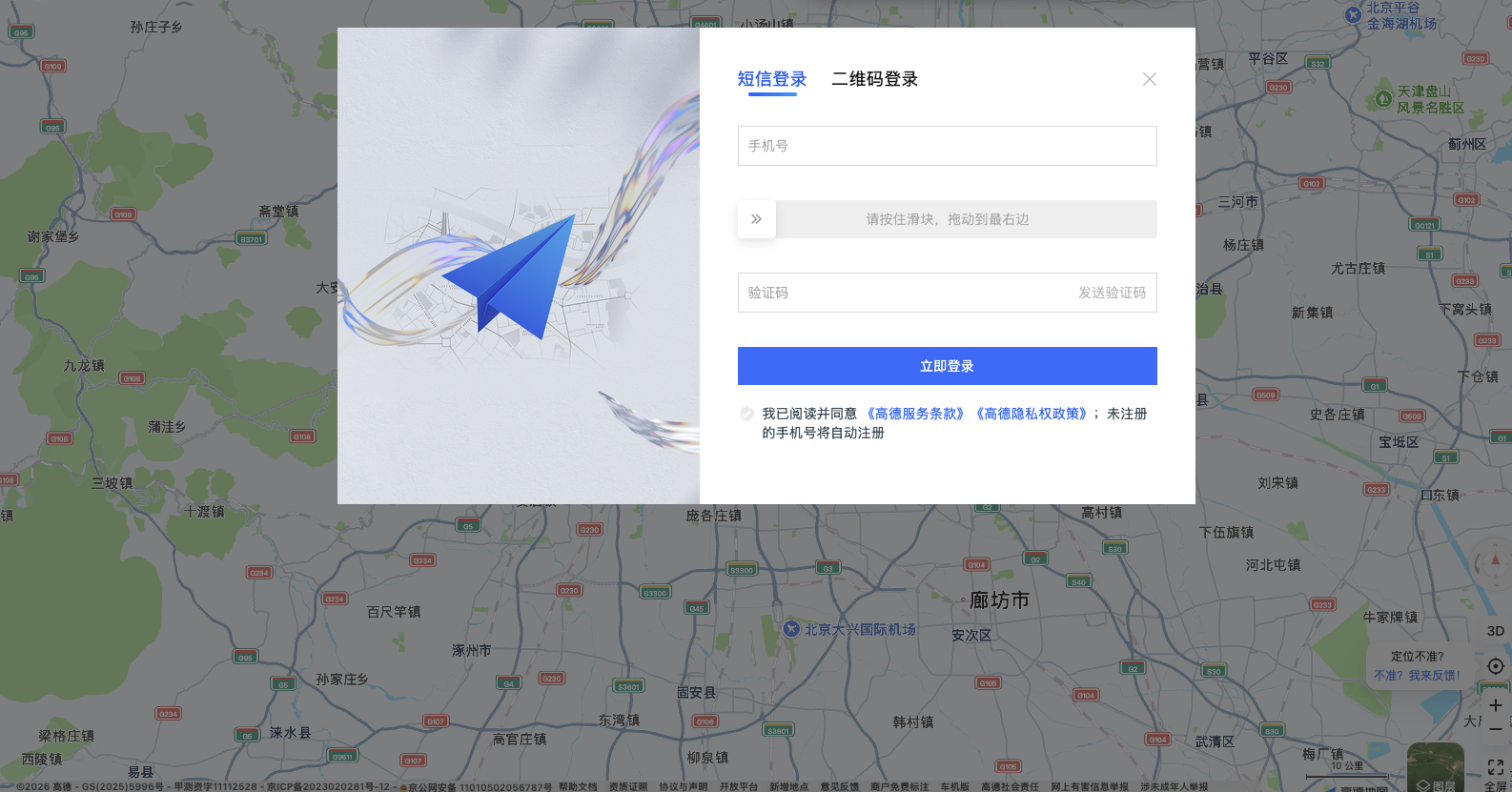
This run found nothing. The page title stayed at its default, so neither the Wayback path nor the Jina path returned the traffic data. The Wayback CDX queries came back nearly empty, about 1.3 kB, which suggests no usable snapshot existed. Jina returned about 5.6 kB, most likely the Amap login wall in Figure 1 rather than the page behind it. The roughly 5 kB sent to webhook.site was the empty result lists and that block page. The agent leaked an IP address to webhook.site and got nothing else of value.
It shows the route an agent will try, how long urlquery keeps a page open (the Jina fetch only happens at 12 seconds, and the report captured it), and that the fleet, or something using its playbook, was still running after it was exposed.
The start of one decoded payload, taken from the httpbin link in Figure 4:
<!doctype html><meta charset="utf-8"><title>Amap bootstrap ssr</title><iframe style="display:none" src="https://www.amap.com/service/switchVersion?enable=1&src=auto_new_gray"></iframe><script>setTimeout(function(){location.replace("https://amap-pc-ssr…Indicators
| Indicator | Value |
|---|---|
| Payload marker | gc4v4 (earlier versions gc4v1 to gc4v3 implied) |
| Title markers | GC4HIT: GC4JINA: |
| Exfil inbox | webhook.site/c3110b8a-0364-4277-8070-8010116c28f9 |
| Payload host | httpbin.org/base64/ URLs carrying base64 HTML (observed prefixes PGh0bWw and eDwhZG9jdHlwZQ) |
| Routing services | web.archive.org (CDX API), r.jina.ai |
| Target | Amap POI B035300ESE |
| urlquery report | 0e544365 |
| Infrastructure (fleet) | Tencent Cloud, Hong Kong; code resembling Tencent Hunyuan and Zhipu GLM, per Swarmchasers |
Conclusion
A suspected AI agent, under pressure to return a number, built a five-service pipeline to scrape a single Chinese map listing without ever contacting it, and was still doing so after the operation had been publicly exposed. The attempt failed, but the method is cheap, repeatable, and hard to attribute. As more agents are given web access and measured on what they retrieve, more of them will find routes like this one. The practical lesson is that restricting an agent’s request types does little when public infrastructure will lend it a browser. Containment has to account for the whole chain, not just the final target.
Sources
Swarmchasers, “We found a Chinese agent fleet” (preliminary), October 4, 2026. Swarmchasers report
Transluce, “Early rogue AI agent activity and attempts to hack found on urlquery.net,” September 23, 2026. Transluce report
Transluce, “AI Agents Targeted U.S. and Canadian Government Websites,” September 30, 2026. Transluce government-sites report
HUMAN Security, 2026 State of AI Traffic and Cyberthreat Benchmarks. HUMAN Security report
urlquery report 0e544365.
- HUMAN Security report ↩
- URLquery is commonly used by cybersecurity professionals and can be accessed via either a web browser or an API. ↩